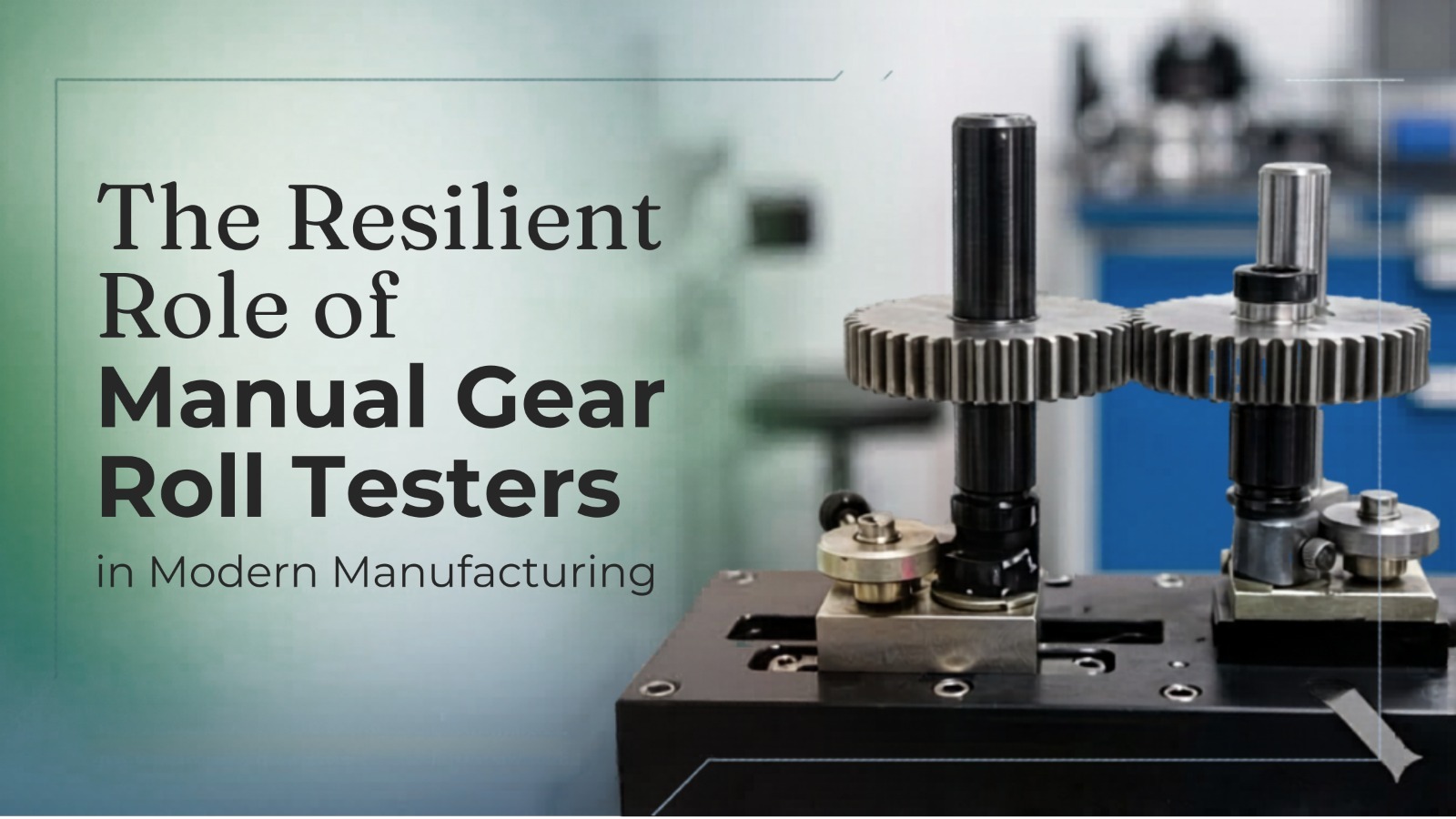
In an era defined by CNC precision, high-speed automation, and complex digital inspection systems, it is tempting to view manual tools as relics of the past. However, in the high-stakes world of gear manufacturing, the Manual Gear Roll Tester remains a cornerstone of the shop floor.
While automation offers scale, manual testing offers something equally critical: practicality, immediate feedback, and cost-efficiency. Here is why this tool remains indispensable and who stands to benefit most from its use.
Why Manual Gear Roll Testers Remain Essential
- The Perfect Balance of Cost and Value
Automated Gear Inspection Clusters (GICs) require significant capital investment, specialized maintenance, and climate-controlled environments. Manual gear roll testers provide a high-ROI alternative, delivering dependable results without the overhead of complex software licenses or high-energy consumption.
- Mastering Composite Error Detection
The primary strength of a roll tester is its ability to simulate real-world conditions. By meshing a production gear with a master gear, these testers detect Total Composite Error (TCE) and Tooth-to-Tooth Composite Error (TTE). This functional test mimics how the gear will actually perform in its final assembly—a metric that pure coordinate measurement sometimes misses.
- Shop-Floor Durability
Delicate electronic sensors can struggle in high-vibration or dusty environments. Manual testers are robust and “shop-hardened.” They are designed to sit right next to the hobbing/ shaping/ honing/ grinding machines, allowing operators to verify quality instantly without walking to a remote standard room.
- Speed and Simplicity
Not every gear requires a 20-page data report. For many applications, a quick manual roll is the fastest way to identify burrs, nicks, or heat-treat distortions. With minimal training, a technician can validate a part in seconds, keeping production moving.
Who Should Use a Manual Gear Roll Tester?
While high-volume automotive plants may lean toward automation, manual testers are the “gold standard” for several key sectors:
- Small and Medium Enterprises (SMEs): For shops where every capital expenditure must be justified, a manual tester provides professional-grade quality control at a fraction of the cost.
- Tool Rooms & Maintenance Units: When inspecting worn gears for replacement or performing one-off repairs, the tactile feedback of a manual tester is invaluable for diagnosing mesh issues.
- R&D and Prototyping: Engineers developing new gear profiles need rapid feedback. A manual setup allows for quick “trial and error” without the time-consuming programming required by CNC testers.
- Technical Education: There is no better way to teach a student about backlash, center distance, and gear geometry than through the hands-on operation of a manual roll tester.
When Should You Consider Upgrading?
A manual tester is a workhorse, but it isn’t a universal solution. You should consider moving toward an automated or digital system (like our GearMate or CNCtize MRT integrated solutions) if:
- You require 100% data traceability and digital archiving for aerospace or medical audits.
- You are running high-volume, 24/7 production where manual handling becomes a bottleneck.
- Your tolerance requirements are in the sub-micron range and require automated compensation.
The Bottom Line
Choosing the right inspection tool isn’t about buying the most expensive technology—it’s about matching the tool to the task. The manual gear roll tester survives because it works. It is reliable, relatable, and remarkably effective at ensuring that the gears turning our world are doing so accurately.
Looking for the right fit? At CalibroMeasure Equipments, we bridge the gap between traditional reliability and modern precision. Contact us today to find the perfect testing solution for your shop floor.